Future-Ready Facility Management: Automation, Mobility, and AI in Modern CMMS
An expert's take on how automation, mobile CMMS, and AI are transforming facility maintenance, moving teams from reactive firefighting to proactive, data-driven operations.
MaintainNow Team
February 14, 2026
Introduction
The persistent hum of an HVAC system, the clank of a production line, the silent flow of water through pipes—these are the heartbeats of any facility. And the facility management team is the cardiologist, tasked with keeping it all running. For decades, this role was defined by firefighting. A call comes in, a machine goes down, and the team scrambles. The measure of success was how quickly the fire could be put out. That world is fading, and fast.
The pressures on today's facility and maintenance managers are immense and multifaceted. Budgets are perpetually squeezed. The skilled labor gap is no longer a future problem; it's a present-day crisis. Aging infrastructure crumbles under the weight of increased operational demands. And on top of it all, there's a growing mandate from the C-suite to transition maintenance from a necessary cost center into a strategic contributor to the bottom line. Just "keeping the lights on" isn't good enough anymore.
This shift isn't being driven by wishful thinking. It's being enabled by a profound evolution in the tools of our trade. The old-school CMMS—the clunky, server-based software that was little more than a digital filing cabinet—is being replaced by something far more dynamic. Modern CMMS software is becoming the central nervous system of facility operations, a platform where automation, mobility, and artificial intelligence converge to create a truly future-ready management ecosystem. This isn't about incremental improvements. It’s about a fundamental change in how we approach maintenance management, moving from a world of reaction to one of prediction and optimization.
The Automation Engine: Moving Beyond the Calendar Reminder
For many, "automation" in maintenance still conjures up an image of a simple calendar notification: "It's the first Monday of the month, time to inspect Fire Extinguisher #14." While that's a start, it's a bit like using a modern smartphone only to make phone calls. The potential is so much greater. True automation in a modern maintenance environment is about creating intelligent, interconnected workflows that eliminate administrative drag and let your team focus on actual wrench time.
Think about the lifecycle of a typical work order. A problem is identified. A request is submitted (often via email or a sticky note). A manager reviews it, prioritizes it against a dozen other screaming emergencies, assigns it to a technician, and hopes they have the right information and parts. The technician does the work, fills out a paper form, and turns it in at the end of the day. The manager then (maybe) has someone enter that data into a spreadsheet. The number of non-value-added steps is staggering.
Modern automation short-circuits this entire inefficient process.
Intelligent Work Order Generation
This is the next level of preventive maintenance. Instead of just time-based triggers, a sophisticated CMMS can generate work orders based on actual conditions. An IoT sensor on a critical motor detects a slight increase in vibration signature over a 48-hour period. Instead of waiting for a catastrophic failure, the system automatically generates a high-priority work order for an inspection, assigns it to the technician certified in vibration analysis, and even attaches the asset's recent performance data. The manager doesn't have to do a thing except see the notification. The system connected the dots.
Streamlining the Supply Chain
Automation also extends deep into MRO (Maintenance, Repair, and Operations) inventory. When a technician uses a specific part to complete a work order on their mobile device, the system doesn't just log the part's use. It automatically decrements the inventory count. If that part drops below a pre-set reorder point, the CMMS can automatically generate a purchase requisition and route it for approval. This simple workflow prevents one of the most common sources of extended downtime: realizing you don't have the critical spare part you need right in the middle of a repair. It closes the loop between maintenance execution and procurement, something that has historically been a major point of friction.
This level of workflow automation is no longer the exclusive domain of massive enterprises with multi-million dollar EAM systems. The beauty of modern cloud-based platforms is their accessibility. A tool like MaintainNow, for example, is built around these exact principles—making sophisticated workflow automation simple to configure and deploy. It’s designed to handle the logic, so managers can focus on the strategy of maintenance planning, not the drudgery of manual data entry and task assignment. It's about building a system that works for you, not a system that you have to work for.
Untethered Operations: Mobility as a Wrench Time Multiplier
The single most transformative technology in maintenance over the last decade hasn't been a sensor or an algorithm. It's been the smartphone in your technician's pocket. For years, the shop floor, the boiler room, and the rooftop were data black holes. Technicians worked from paper orders, relied on memory for asset history, and trekked back to the office to look up a schematic or log their work. All of that travel and administrative time is the enemy of productivity.
A mobile-first CMMS strategy fundamentally changes the dynamic of work. It untethers the technician from the desk and puts the full power of the maintenance database directly at the asset's location. This isn't just a convenience; it's a force multiplier for your entire operation.
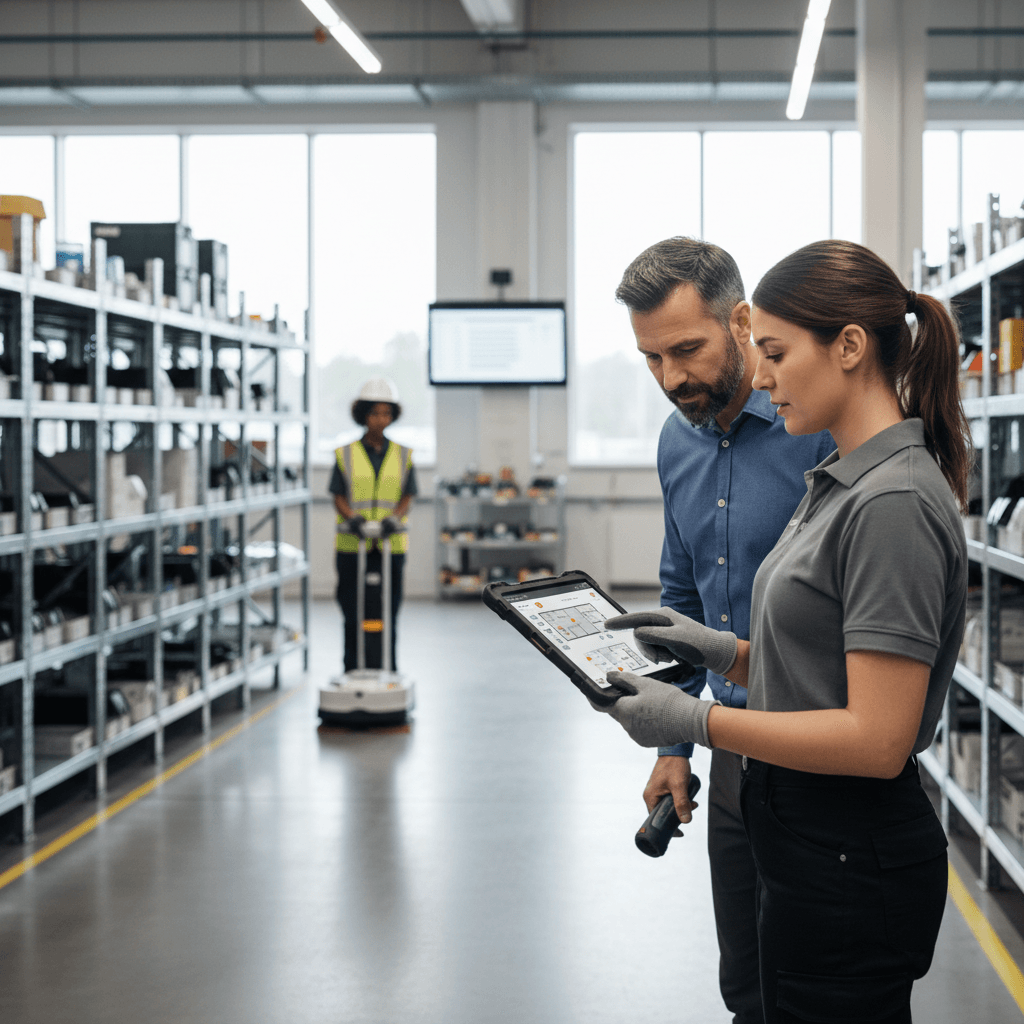
The impact is immediate and profound. A technician arrives at a malfunctioning air handler. Instead of starting from scratch, they scan a QR code on the unit and instantly pull up its entire history on their tablet: every past work order, every part replaced, notes from other technicians, and linked PDF manuals and schematics. They know what was done last week and what was done five years ago. This context is invaluable. It can turn a four-hour diagnostic puzzle into a 30-minute fix.
Data capture becomes instantaneous and far more accurate. Technicians can log their time, note the parts used, detail the cause of failure, and attach photos or videos of the repair *as they are doing the work*. No more trying to decipher greasy handwriting at the end of a 10-hour shift. This clean, real-time data is the fuel for every other optimization effort. Without it, your preventive maintenance program is based on guesswork, and your asset lifecycle analysis is a fantasy.
But a word of caution: not all mobile CMMS experiences are created equal. Simply having an app doesn't cut it. A clunky, hard-to-navigate interface that was clearly designed for a desktop and then shrunk down will be rejected by your team. Technicians are craftsmen; they have little patience for poor tools, digital or otherwise. The platforms that succeed are the ones that were designed with a mobile-first philosophy. The user experience must be intuitive, fast, and focused on the task at hand. Accessing information through a dedicated web app, like the one offered at app.maintainnow.app, ensures that whether a technician is using a company-issued tablet or their own phone, the experience is consistent and frictionless. It has to make their job easier, not add another layer of technological frustration. When mobility is done right, the adoption is organic, and the improvement in wrench time—the percentage of the day spent on actual value-added maintenance work—can easily climb from an industry average of 25-35% to well over 50%.
The Intelligence Layer: Practical AI for Predictive Maintenance and Beyond
Artificial Intelligence. It's a term that's often met with a mix of hype and skepticism in the maintenance world. The mental image is of some futuristic robot diagnosing a problem. The reality is far more practical and, frankly, far more powerful. In the context of maintenance management, AI is essentially an incredibly sophisticated pattern-recognition engine. It sifts through the mountains of data that your CMMS is collecting and finds the signals in the noise—signals that a human would likely miss.
The foundation of any good AI strategy is good data. This is why the move to a mobile CMMS is so critical. The real-time, accurate data captured by technicians on the floor is the raw material that AI algorithms refine into actionable insights.
From Preventive to Predictive
Preventive maintenance (PM) is based on calendars and averages. "We'll service this pump every 500 operating hours because the manufacturer says so." Predictive Maintenance (PdM), powered by AI, is based on actual conditions. "We will service this pump *now* because its vibration signature has deviated 15% from its baseline over the last 72 hours, an early indicator of bearing wear that historically leads to failure within the next 150 operating hours."
This is achieved by feeding data from IoT sensors—monitoring things like temperature, vibration, pressure, and electrical current—into an AI model. The model learns the normal operating "heartbeat" of an asset. When it detects a subtle anomaly that precedes a failure, it triggers an alert. This allows teams to intervene on their own terms, scheduling downtime instead of having it dictated by a catastrophic breakdown. The cost savings in parts, labor, and—most importantly—unplanned production downtime can be enormous.
The Evolution of Maintenance Scheduling
But AI's role doesn't stop at failure prediction. It's revolutionizing maintenance scheduling and resource optimization. An intelligent CMMS can look at a backlog of 100 open work orders and do more than just list them by priority. It can analyze the specific skills required for each job, check the real-time availability of technicians with those certified skills, factor in the location of the assets to create an efficient travel route, and check MRO inventory to ensure all necessary parts are on hand.
It can even optimize your entire PM program. By analyzing years of work order history, an AI algorithm might discover that you're over-maintaining certain assets. The data might show that a specific monthly PM procedure on a set of exhaust fans has never once identified a fault, and failures are still occurring randomly between inspections. The insight? That PM task is wasting labor and providing no value. Conversely, it might identify a class of assets that are failing consistently just before their scheduled semi-annual service, suggesting the PM frequency needs to be increased. This is data-driven asset lifecycle management in action.
This isn't science fiction. These capabilities are being integrated into modern CMMS platforms today. They rely on the system's ability to act as a central repository for all asset-related data. A platform like MaintainNow becomes the system of record, capturing not just what was done, but when, by whom, what parts were used, and what the conditions were. Over time, that historical record becomes an organization's most valuable asset in the quest to build a truly intelligent and future-ready maintenance operation.
Conclusion
The role of the facility and maintenance professional is undergoing a seismic shift. The old model of reactive heroism is unsustainable in the face of today's economic and operational pressures. The future of the industry belongs to the strategists, the optimizers, and the data-driven decision-makers. The transition from a cost center to a value-driving pillar of the organization is not just possible; it's becoming an expectation.
This transformation isn't about a single piece of technology. It's about the convergence of automation, mobility, and intelligence within a unified platform. Automation handles the administrative burden, freeing up human talent for higher-value work. Mobility untethers your team, putting information where it's needed most and ensuring the capture of clean, real-time data. And AI analyzes that data, providing the predictive insights needed to get ahead of failure and optimize every facet of the maintenance lifecycle.
Choosing the right CMMS software is no longer just about tracking work orders. It's about choosing a partner for this transformation. It's about finding a platform that was built for the modern realities of maintenance—one that is accessible, mobile-first, and intelligent. The goal is to build a resilient, efficient, and forward-looking operation, and the tools to achieve that are finally within reach for organizations of every size. The future of facility management is here, and it's powered by data.
Ready to implement these maintenance strategies?
See how MaintainNow CMMS can help you achieve these results and transform your maintenance operations.
Download the Mobile App:


✅ No credit card required • ✅ 30-day money-back guarantee • ✅ Setup in under 24 hours